Increasing Students’ Comfort With Research Tasks
Strong critical thinking skills are essential in order for students to determine whether a resource is reliable or not.
Your content has been saved!
Go to My Saved Content.
As adults, when we are told to do our own research, we don’t always jump for joy at the task. I can also say that research projects and activities can seem daunting to students. Over the years, I’ve seen them not wanting to do the work at all, finding artificial intelligence (AI) shortcuts, and feeling extreme anxiety over the work. It can seem tedious and impossible to some students. We know that in college and career, research is an essential skill. What our students don’t realize is that they do it on their devices daily and how it connects to their school work.
I teach in a high school English classroom of mixed abilities and English learners. I do what I can on a daily basis to guide students in understanding how their world can connect to formal academic research. In this article, I’ll discuss the practices I utilize to facilitate learning that builds up my students’ research skills. I’ll share the specific ways that I support students with research curation and citations through technology-related and non-technology-related avenues. Additionally, I’ll share creative ways that allow students to communicate their learning through research.
Activities That Build Students’ Research Skills
Because of time constraints, many teachers skip the skill-building part of this work and go straight to finding the sources and creating the product, whether it’s an e-book or a podcast. If we put more time into skill building, the process and product will run smoother in our classrooms.
One of the ways that I’ve supported research skill building is through a scavenger hunt that I created on Padlet, using some questions from the Odell Education literacy curriculum. One of the toughest parts of research is selecting a topic that is not too general and not too narrow. In our curriculum for 11th-grade English, my students had to research a topic related to the American dream. The American dream is a broad idea, so I made a Padlet board that listed topics and subtopics that my students could research.
Next, they had to complete a handwritten scavenger hunt where they learned about topics and different subtopics listed on the Padlet board. Also, there were “ideal sources” that were retrieved from Newsela that were examples of sources that were legitimate for those topics that students needed to read through and answer questions about.
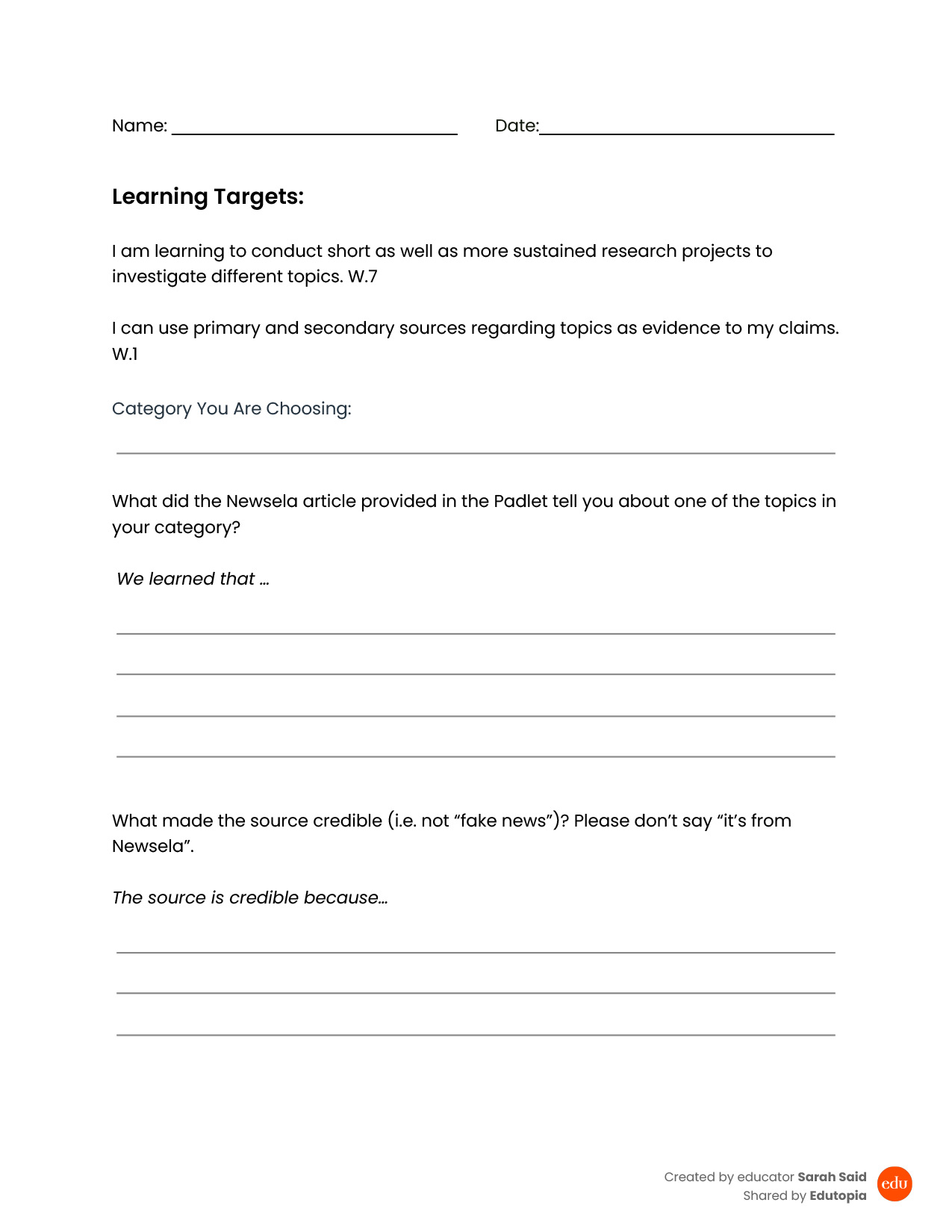
After the scavenger hunt, the students had to complete a proposal that explained the topic they would research, as well as the sources they read to learn more about the topic and subtopic. They also had to identify ways they thought they could continue their research. This proposal was a handwritten handout that I gave students to complete. The reason it is handwritten is that I really want students to process their thinking. Many times that process works better through having students handwrite their responses first.
Once they completed their initial proposal, my students learned how to create inquiry questions. They learned about the three categories of questions: factual, concrete, and debatable. I had students handwrite each type of question. Then, after they wrote the questions, they had to evaluate questions—their own and those of a peer—to see if they were clear, specific, not too broad, and researchable, and encouraged thinking. After narrowing down their questions, students now had an inquiry question to add to their proposal.
Thanks to our librarian, students learned about the SIFT strategy (stop, investigate the source, find better coverage, or trace claims) to understand whether a source is credible or not. Our librarian created a lesson about different hypothetical situations that students could relate to, such as “researching a career.” Their purpose was to have them learn how to distinguish strong information from misinformation. In team discussions, students had to evaluate what the “character” should do and which sources the character should use to support their research.
In addition to the SIFT strategy, I wanted students to understand the author’s biases. To that effect, students created one-pagers in teams about the different types of biases that authors use and what to look for when these biases occur—i.e., word choice, tone, and loaded language. To cement their learning, I had students complete a jigsaw activity where they taught their peers in other groups about the elements of bias.
Resource Curation and Citation
My students do learn how to write annotated bibliographies, but I also utilize documentation panels and boards so that students can visually organize sources and ideas. The visual presentation of information can be helpful for students to process what they are learning. This visually oriented process helps them understand how their topics, inquiry-based questions, and sources all connect.
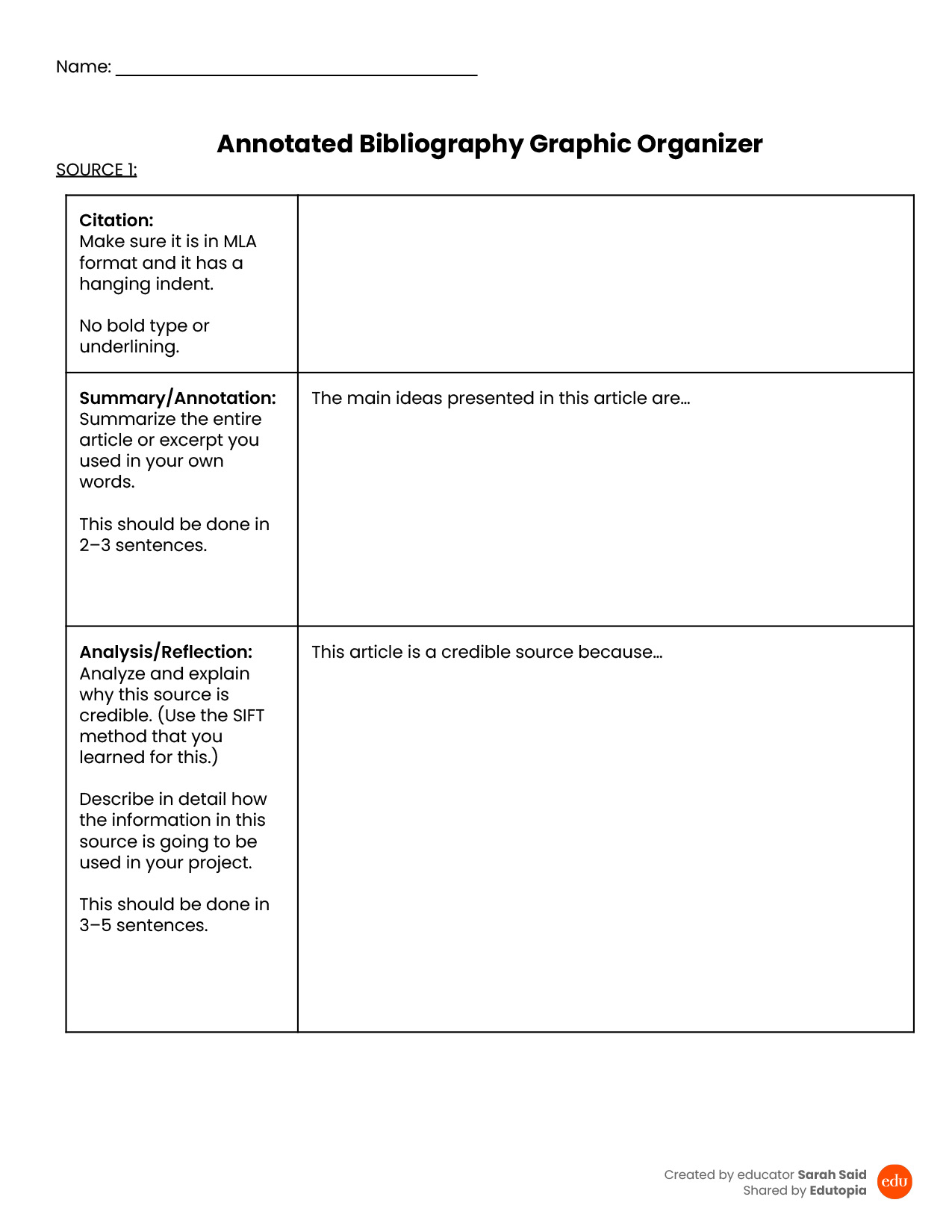
Then, they can write their annotated bibliographies. I created an organizer that gave students space for their formatted source information, source summaries that connect to the inquiry question, and a space to explain the author biases that they noticed in the source.
Creative Ways of Communicating Research
Over the years, students have been given slide deck after slide deck by their teachers. In my classroom, I’ve actually had students say, “Not another slide deck.” I think, as teachers, we can be more creative with how we have students communicate their research. Yes, students still need to write about what they have learned through the research process, write appropriate claims, give reasons for them, and use evidence to back up those claims.
This can be communicated in ways beyond a slide deck. I give students a choice board with the following options:
- Create a podcast that explains your claims, reasons, and evidence. This can be done through Canva or WeVideo.
- Create an informational movie and edit that movie on Canva. The movie can also be a public service announcement, depending on the purpose of the research and project.
- Create an informational physical children’s book, or use Book Creator to explain how to conduct research so that a younger student can understand it. I’ve even shared these books with elementary school teachers to teach their students.
- Make a visual collage to accompany an essay about the topic.
Can students still communicate this work in a formal presentation using these mediums without a slide deck? Yes, they can. We can also find ways for students to orally communicate their learning. In my class, I’ve used the Kagan “Give One, Get One” discussion strategy. Students planned what they were going to share with peers. They then had to write down what peers taught them about their topics.
Through this process, I saw my students produce thoughtful work. Research learning became a more malleable process for them. There was less copying and pasting, the sources they selected were better, and students actually read them thoroughly. My students understood more about the credibility of a source, and the questions that they researched held more significance to the topics I presented. They also enjoyed producing their research products because they had more choice in what they could create. It wasn’t a hurried slide deck that was just made with AI.