How to Teach Kids to Be Kind to Themselves
Kindness toward others is often taught in elementary school, but it’s also important for students to extend it to themselves.
Your content has been saved!
Go to My Saved Content.
“Choose Kind,” “When you can be anything in the world, be kind,” “Kindness Matters.”
There’s no shortage of messaging about kindness. Most students are well-versed in the importance of being kind to others. However, there is little attention to the value of being kind to yourself. Self-love does not always come naturally. Elementary students can benefit from simple techniques and routines that reinforce self-care and self-love. In order to be kind to others, students must first deeply understand how to be kind to themselves. Here are some simple routines I use in my classroom that can increase self-love in your students.
Why Teach Self-Love
It’s alarmingly common for students to have negative thoughts about themselves. A recent study shows that up to four out of 10 high school students report feelings of sadness or hopelessness. This can be even higher in marginalized groups such as the LGBTQ community. Negative thought patterns can cause poor self-esteem, create difficulty with building healthy peer relationships, and interfere with academic progress.
Teaching students strategies to practice self-love can disrupt negative self-talk patterns, increase self-esteem, and have a myriad of other positive social, emotional, and health effects. Explicitly teaching positive self-love routines and strategies can disrupt negative thought patterns and help students replace them with healthier, happier alternatives.
Normalize Positive Self-Talk
Teach students how to say kind words to themselves. In order for it to stick, it’s important for positive self-talk to be explicitly taught and routinely practiced. One way you can do this is to model your positive self-talk out loud. For teachers, this can sound like “Wow. That was hard, but I’m proud of myself for persisting through that challenge” or “I made a mistake, but I will try again.”
By modeling positive self-talk, we give students permission and words to use when they have negative thoughts about themselves and doubts about their worth.
Self-Love Station
Carve out a small space in the classroom dedicated to promoting self-care. This station should be a comfortable and cozy area (think soft pillows and calming colors) for students to visit when they feel frustrated or down on themselves.
This area can have coloring pages with motivational words for younger students and affirmation journals for older students. Books promoting self-love are also a great addition to the self-love station. My personal favorites are Stand Tall, Molly Lou Melon and Giraffes Can’t Dance. In my classroom, the self-love station is open for five-minute increments during transition times such as morning work, after recess, and after lunch. Once one student is finished, another can pop in.
Proud Moment Journal
Set aside a little time either daily or weekly for students to reflect on their accomplishments. Proud moment journals are a simple yet powerful way to document and reflect on daily or weekly achievements. The act of writing and/or drawing small and big wins is joyful and satisfying for students. Writing their achievements down ensures that these special moments are not forgotten. Dedicating a journal to proud moments provides proof to students of their forward progress and personal growth, and it boosts their self-esteem.
Remind students that no accomplishment is too small. If it makes you proud, write it down.
Positivity Pouches
I’ve found that it’s a lot harder for students to find positive words when they’re actively engaged in struggle. This is where positivity pouches come in handy. I like to start off the school year with this activity to intentionally focus on happiness. Instruct students to generate positive messages about themselves when they’re calm and happy. Students can write and decorate positive affirmations on slips of paper.
Create a receptacle in which to place them, such as a Ziploc bag or a small tissue box. This can live on the students’ desks. When students face a challenge and need some encouragement, they can pull out a positive message to give themselves a little boost of encouragement.
Strengths Résumé
Have students create a strengths résumé to showcase their aptitudes, interests, and talents. First, I have students brainstorm about their perceived strengths and prompt them with questions such as “What do you like to do?,” “What are you so good at that you can teach others?,” and “What makes you feel proud?” These questions help students identify their skills.
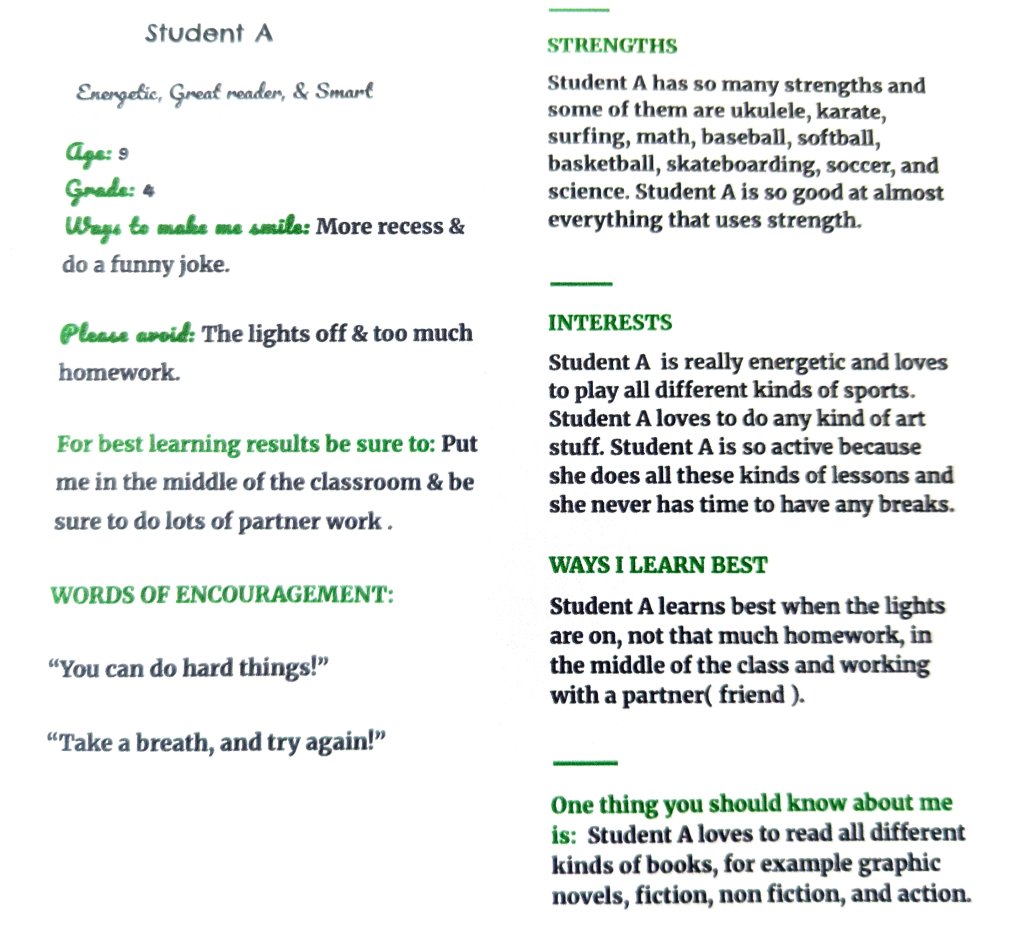
After this, have students make a one-page résumé showcasing their personal strengths. They can also include a section called “Words of Encouragement” that features sayings or phrases that help them overcome challenges. Be sure to provide time for students to share their résumé with you, classmates, parents, and other teachers.
A great time to share résumés is at student-led conferences. This way, students are empowered to share their strengths with their families. Also, students can benefit from “updating” their résumés at the end of the year to highlight learning and growth. Students build confidence by telling others about their unique talents, interests, and preferred methods of learning, as well as celebrating their own progress. This is a powerful way to reshape a deficit-based narrative into a strengths-based one. Implementing strengths résumés in my class has helped my students build self-confidence and self-love.
Set Gratitude Routines
In order to practice self-care, students also benefit from engaging in a weekly gratitude routine. One routine I like to use in my classroom is a weekly gratitude circle. Throughout the week, students and teachers can write down things they are thankful for that week. For example, one student might share how a friend helped them. Another might write about how they mastered their multiplication facts. At the end of the week, for a quick 10 minutes, students assemble in a circle and take turns reading the slips. This is a quick and fun way to ground the classroom in appreciation and joy.
A person can only love others as much as they have love for themself. When you teach students to see the good in themselves, they will be more likely to see the good in others. Teaching students how to cultivate self-love will create a positive impact beyond the classroom—building communities that amplify love and empathy for others.