Using Project-Based Learning to Connect Your Students With Peers in Other Countries
A collaboration between middle school students in Colorado and India can serve as a model for having students tackle real-world issues.
Your content has been saved!
Go to My Saved Content.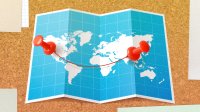
As the crow flies, Durango, Colorado, and New Delhi, India, are nearly 8,000 miles apart. Despite their differences in geography, culture, and school systems, students from both places discovered common concerns about the health of their rivers in a global action project.
Teachers were also learners in the project, which leveraged project-based learning (PBL) strategies and online collaborative tools to build relationships across time zones. For veteran teacher Lu Boren of Escalante Middle School in Durango, the rewards far outweighed the challenges of her first foray into global education. “How sad it would have been,” she reflected, “had I not tried it.”
The project—aptly named “A Tale of Two Rivers for the Colorado and the Yamuna”—offers lessons for other teachers who want to encourage global citizenship beyond social studies.
Finding a Match
As an agriculture teacher and farmer in Colorado, Boren has spent years engaging her students in watershed projects close to home. With demand for water increasing globally, she wants students to understand how issues related to natural resources extend far beyond their own backyard.
Meanwhile, Geeta Devlal teaches science at Delhi International School Edge. She designs authentic projects “to teach students what they can’t learn from a book,” she said—“but global was something new.”
The teachers connected through the JDO Foundation. The Colorado-based nonprofit supports global education by matching interested teachers and providing coaching and technical support at no cost.
In a typical partnership, students should be similar ages. Teachers need to match with partners whose curricular goals overlap with theirs. Having an intermediary do the initial matchmaking helped Boren and Devlal get off to a faster start and find common ground in their two content areas. (Other platforms for connecting on global projects include iEARN, Take Action Global, and The Goals Project.)
Before getting too far with project planning, teachers should take time to get acquainted. Their initial online conversation “gives them space to build a relationship,” explained Russett Goulding, the JDO coach who supported Boren and Devlal. “That becomes their model for their first live meet with students.”
Overcoming Bumps
Time zones and technology can present challenges for teachers who are new to global collaboration, but digital tools can offer solutions.
Boren and Devlal used Google Meet and Google Classroom to connect students in real time as well as asynchronously. They used Padlet as a shared bulletin board for posting students’ research questions, comments, photos, videos, and more. Goulding was available to help troubleshoot tech challenges and resolve calendar conflicts.
Teachers may need to navigate cultural challenges, as well. Students may have different understandings about how to address elders or how to offer constructive feedback. “These questions can lead to beautiful conversations about how cultures operate. There’s no right or wrong,” Goulding added.
Leadership support is essential to the success of global projects, which may require adjusting schedules, arranging for field research, engaging with experts, or gaining parent buy-in. Boren knew from the start that she had the backing of Superintendent Karen Cheser. The two first learned about JDO together when they attended a workshop at the annual ISTELive conference. Similarly, Devlal’s leader encouraged her to join a collaborative project, reflecting the school’s vision to nurture global citizens.
Using Their Voices
For the water project, students started by comparing their daily uses of water and learning about watersheds broadly. From there, they took a closer look at the issues facing their own communities. In Durango, water scarcity emerged as a top concern, affecting farmers, Native tribes, and other stakeholders across the sprawling Colorado River Basin. In Delhi, students went to the banks of the Yamanu River to gather samples for testing. Shocked by the smell of the polluted urban waterway, students asked, “Is this the same water that comes into our houses?”
Comparing their findings, students realized how a global issue like access to clean water affects local communities differently. “For my kids to realize that sustainability issues are different, and to care about what was happening to kids in India, was phenomenal,” Boren said.
Students used their research to create public service videos with messages about sustainability. But they weren’t ready to stop there. In both communities, students wanted to know, “What can we do?”
As a final event, students and teachers organized a public Earth Day forum that enlisted expert panelists from two continents. The two classes worked collaboratively to create the agenda and fine-tune the questions they wanted to pose to experts. Participants gathered in person in Durango while, a dozen time zones away, Delhi classmates and Indian experts joined virtually.
A Colorado student introduced the event by explaining that he and his classmates were motivated to do the project to become better global citizens and step out of their comfort zones. “We are the next generation of caretakers of the Colorado,” he said, “and sustainability rests on our shoulders.”
Devlal watched the experience transform her students. They recognized that advocating for solutions to water pollution—from government regulation to technical innovation—“is now their responsibility,” she said. “They have become problem solvers. That’s how change will come.”
For Boren, the Earth Day event was another first in her long teaching career. “I had never done anything that big and that public before,” she said. Watching her students rise to the occasion, along with their counterparts in India, she recognized the power of the learning experience. “They walked out of there 10 feet tall,” Boren added. “They knew they had done something special.”