Cultivating Literacy in Kindergarten With a Book Club
Teachers can encourage young learners’ interest in reading by facilitating weekly class discussions.
Your content has been saved!
Go to My Saved Content.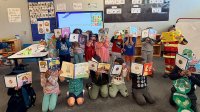
When I first started teaching kindergarten, my biggest challenge was to create an environment where kids could develop a genuine love for reading. I wanted book reading to be the most exciting time of the day rather than being a chore, so I needed to come up with something to help my students look forward to reading time.
I had the idea of creating a book club—but how could I make it interesting for 5-year-olds? It was a challenge. Instead of picking one book for the whole class and having them read and share their opinions about the book, as in an adult book club, what would happen if I picked one theme for a month and explored it through different books? When I first came up with this idea, it really excited me, but putting it into practice was difficult. Taking 20 to 30 minutes every day to read a book outside of the curriculum is a challenge, and I wanted to maintain consistency. I wanted my students to build genuine enthusiasm for reading before they ever encountered formal letter and sound instruction.
Consistent Reading at Home Promotes Relatability
While there was no specific requirement for my students to read every night, I shared the book club idea with their families, and many were excited to help me implement it. Some parents saw the activity as a fun way to read books every day, and several families had conversations about the books during dinner. The consistent reading at home helped students relate their own experiences to the themes in the books. For example, if they helped a friend at school, students were very excited to share what happened, describe how they helped, and then explain the ways in which it was similar to what a character did in a book.
Character Dress-Up Days Promote Student Engagement
The feedback from families showed the positive impact on my students, which made me want to add another element to our book club. I came up with the idea of bringing the characters from the books to life. But I wasn’t sure how to do it in a manageable way. I work for Title 1 school where most of my students come from low-income households. I wanted to do something creative where kids could have fun without putting financial pressure on their families.
I asked students to pick their favorite character out of all the books they read and come dressed up like that character on the last Friday of the month. It didn’t have to be a fancy costume; if they had a T-shirt with that character on it, that was perfectly fine! If they couldn’t dress up, that was OK too. They usually just wore their favorite shirt to school that day.
On book club day, we started with 15 to 20 minutes of coloring. I gave the class coloring pages (generated by an AI tool) of their favorite characters and the theme of the month. After that, I spent 45 minutes to an hour engaging students in conversation about their books. I usually asked them, “How many books have did you read, and what did you like about them?” I also encouraged students to stand up and say a few words about their chosen character in front of the class. The goal of this oral presentation was to help bring kids out of their shell. However, some students were shy and uncomfortable with talking in front of the class, so I made sure that this conversation time also included small-group discussions so that kids had an opportunity to talk about their favorite books and characters with their friends.
Include Multilingual Learners
Many of my students came from non-English-speaking families, and it was important for them to feel included so that they could enjoy our book club. For the past two years of implementing this activity, I’ve sent newsletters to families each week, translating them into my students’ home languages.
In these letters, I told families that students could read books in their home language and bring those books to class to share them with their classmates. Doing this helped the multilingual learners in my class grow in their conversational skills and make stronger connections with their peers.
Random Theme Selection Keeps the Activity Interesting
At one point, there was a conflict about the next book club theme. One student wanted a superhero theme, another wanted princesses, and yet another one wanted it to be SpongeBob. Within minutes, choosing the theme became like a tense competition in a reality TV show.
If I didn’t choose what one group of students recommended, I worried that they’d likely lose interest in reading the books according to that theme. So, I decided to involve the whole class and randomly pick a theme. I wrote about a dozen book club themes on pieces of paper and put them in a hat. Then, using equity sticks, I selected one student to reach into the hat. Whatever was written on the paper would be our theme for the month. Once the theme was selected, the class worked together to make a poster and hung it up on the wall.
To bring closure to our book club at the end of the year, we had a final celebration that included a fashion show where kids dressed up as their favorite character, and their families came to watch and cheer them on. The book club became our classroom tradition. It sparked students' imagination, creativity, and fostered a love of reading that my previous students carried with them when they left my kindergarten class.