Exploring Black History Through Music
Teachers can help the origins of jazz and hip-hop come alive for students with resources that highlight these influential music styles.
Your content has been saved!
Go to My Saved Content.Black History Month provides a wonderful opportunity to introduce or reinforce the fact that African and African American music has had a transformative influence on music in the United States. Born out of and continually formed in the midst of brutal cruelty and injustice, the music of African Americans brought styles and innovations that defined and redefined music in the United States and throughout the world.
This story is made up of many characters in thousands of places spanning several continents and hundreds of years. Two places in the United States, Congo Square in New Orleans and 1520 Sedgwick Avenue in the Bronx, tell this story in a particularly clear way. Teaching about these places provides students with a clear entry into this music history as well as anchor points that you can supplement with additional information.
Congo Square, New Orleans
For a century, from the 1740s until the 1840s, Congo Square in New Orleans was unofficially the center of the preservation of West African and Afro-Caribbean music and culture in the United States. Enslaved people around New Orleans had very specific schedules through the week. Six days full of hard work and hard consequences for anything less. Sundays were considered a day off.
Drawing from an earlier French mandate, Sunday mornings were devoted to church attendance. On Sunday afternoons, enslaved people were allowed to gather together. Unlike in most (if not all) other communities in the United States, New Orleans officials allowed enslaved people from different communities to come together in large numbers. In New Orleans, enslaved people were also allowed to play African and Afro-Caribbean instruments.
This meant that Sunday afternoons were filled with music, dancing, and storytelling. West African drumming and dancing traditions were practiced and preserved, as well as Afro-Caribbean traditions coming from enslaved peoples that had been brought from Caribbean islands to New Orleans. Additionally, these African and Afro-Caribbean styles mixed with European styles to produce new music.
The gatherings in Congo Square were ended in the 1840s due to concerns about uprisings among enslaved people and abolition activity. At the end of the Civil War and after, gatherings resumed at Congo Square. Brass bands soon started to play in the square, developing into what we know of as jazz through the hybridization of European band styles, ragtime piano, and West African and Afro-Caribbean styles.
Although there were attempts to stop or diminish the gatherings, Congo Square remained an important place of African American connection and preservation. As the location for many regional festivals and daily informal performances, Congo Square remains a place of musical preservation and innovation.
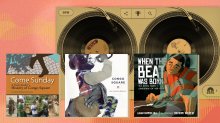
For elementary students, the book Freedom in Congo Square offers a simple diary of the days of the week for enslaved people leading up to Sunday, the day of rest and the day to come together at Congo Square. The illustrations show the joy, movement, and color of Sunday afternoons in Congo Square versus the drabness of harsh enslavement during the other six days of the week.
For older students, Come Sunday: A Young Reader’s History of Congo Square is a collection of primary-source materials related to Congo Square appropriate for middle school and older. Jazz musician Wynton Marsalis recorded an album dedicated to the legacy of Congo Square, working with Ghanaian drummer Yacub Addy. The album gives sonic ideas about what the gatherings in Congo Square would have been like in earlier centuries.
1520 Sedgwick Avenue, The Bronx
On August 11, 1973, a young man and his younger sister held a back-to-school party in the recreation center of their apartment complex on 1520 Sedgwick Avenue. This party was the start of the professional career of Clive Campbell, known as DJ Kool Herc. This party and the subsequent career of DJ Kool Herc are considered by many as the beginning of hip-hop music and the fusion of influences that became hip-hop culture.
Three developments made this party and DJ Kool Herc’s subsequent career important in the history of hip-hop. First, DJ Kool Herc approached his role as a DJ as more than just playing records. He wanted to play music conducive to dancing, specifically the kind of dancing that was developing among him and his peers in the Bronx. This led to the transition of DJ as a passive role to an active music-making role. To make great dance music, DJ Kool Herc began to mix, remix, and add to the music on the records to create entirely new compositions.
In this active role, DJ Kool Herc developed specific techniques to transform records into unique musical expressions. He developed the “merry-go-round” technique where a repeated loop is created by replaying the same section on two identical records back-to-back. This technique extended breaks in songs from the singing where the most intense dancing would occur. He also used the microphone to speak in time over the music—calling to dancers and friends, and adding rhyming lyrics to these breaks. Suddenly, people attending his parties were no longer hearing their favorite records, but new musical creations.
The turntable went from a playback device to a musical instrument. DJs became instrumentalists, conductors, and live producers. Other DJs followed Kool Herc’s lead and began experimenting with the sonic capabilities of the turntables, creating even more unique ideas—different records were blended together, and “scratching” became a sound to be embraced, creating new rhythmic interest.
For elementary students, the book When the Beat Was Born is a simple biography of DJ Kool Herc’s childhood leading up to his establishment as a prominent DJ in New York City. The illustrations allow students to see the turntable setup and early breaking (break dancing) moves, and to get a sense of these early parties as the principles of hip-hop were established and spread.
In 2017, Google produced a Google Doodle honoring hip-hop and DJ Kool Herc’s innovations in particular. The Google Doodle allows users to become DJs—mixing records and scratching. Students can explore on their own or work through 10 learning objectives to earn a trophy.
For older students who are learning how to examine primary sources, there are many recorded interviews with DJ Kool Herc, some even including his sister. An article from DjHistory.com provides significant details for 1520 Sedgwick Avenue as ground zero for the origin of hip-hop. Be aware, these articles are written for adults, and some contain references to violence and drugs.
The innovation and creativity that marked the music of African Americans was never confined to Congo Square and 1520 Sedgwick Avenue, but these places mark a useful beginning for students and teachers to weave together the story of African American music and what it has meant and continues to mean to the world.