5 Books That Help Students Process Complex Emotions
Elementary and middle school teachers can use these books to facilitate conversations about unsettling topics in a safe, supportive environment.
Your content has been saved!
Go to My Saved Content.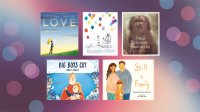
In 2018, Newbery Medal–winning author Matt de la Peña crafted an article for Time magazine. In it, he recounted when a certain “major gatekeeper” wouldn’t support an upcoming picture book he had written, unless one of Loren Long’s illustrations was “softened” for their audience. The picture depicted a frightened boy and his dog hiding beneath a piano while his parents argued across the living room, with an old-fashioned casually sitting on top of the piano. The gatekeeper described it as “too heavy for children” and feared that it might make parents uncomfortable. De la Peña began to wonder, “How honest should we be with our readers?” and “Is the job of the writer for the very young to tell the truth or preserve innocence?”
Teachers face similar questions when choosing books to share with their elementary school–aged students: “Which topics are too sad, too scary, or simply too difficult to hear about and discuss with young children? How do I defend my choices to parents and administrators who might feel uncomfortable?” The main question I ask myself when sharing sensitive books with teachers, students, and administrators is, “Why is this book worth sharing with these students, and how will I support them through it?”
When we focus on why we’re sharing the text rather than the topic itself, the conversation shifts. As social and emotional learning becomes integral in our classrooms, I’m constantly searching for ways to deepen students’ understanding, empathy, identity, or perspective. One efficient way to begin this work is by sharing stories that give students an opportunity to explore these tough topics through a developmentally appropriate text. I’ve used the following picture books in classrooms to help students see their own experiences reflected in the pages of a text and/or get a glimpse into the lives of others.
5 Books That Help Students Explore Deep Topics
Love, by Matt de la Peña and illustrated by Loren Long, is a lyrical exploration of the ways love appears in a child’s life, from family and friendship to moments of comfort, joy, and connection. Importantly, the book doesn’t present childhood as entirely happy or worry-free. It acknowledges that love can exist alongside difficult and frightening experiences, touching on topics like family conflict, the media reporting unsettling news, homelessness and poverty, natural disaster and displacement, as well as loss and grief. (Grades 4–8)
The Remember Balloons, by Jessie Oliveros and illustrated by Dana Wulfekotte, uses balloons as a metaphor for the memories we collect throughout our lives. James loves hearing his grandfather’s stories about his childhood, marriage, and family adventures. But as Grandpa begins forgetting details, repeating stories, and losing memories, James becomes frustrated and confused, and struggles to understand the changes caused by Alzheimer’s disease. As the balloons begin to drift away, James must find a new way to understand and hold on to the memories he and his grandfather shared. This book is a wonderful conduit to introduce Alzheimer’s disease, dementia, grief, loss, fear and confusion connected to illness, and changing family dynamics. (Grades 3–6)
Author Brenda Reeves Sturgess and illustrator Jo-Shin Lee created Still a Family, a touching story about a family who needs to live in separate shelters due to gender restrictions. Despite their time apart and the financial struggles they face, they still feel like a family. Examples of voice, childlike details, and innocent emotions are woven throughout this story, told via the young daughter’s perspective, which raises the question, “What makes a family?” Add this book to your classroom library as a way to start discussions about homelessness, socioeconomic status, shelter living, and family separation. (Grades 3–6)
Jonty Howley wrote and illustrated a picture book that’s simple, yet extremely powerful. Big Boys Cry tells the story of Levi and his dad as Levi ventures off for his first day at a new school. When Levi expresses that he’s a bit scared, his dad tells him, “Big boys don’t cry,” as a way to help him remain strong and confident. Yet, as he travels on foot to school, Levi encounters men of all different sizes, ages, and lifestyles who are crying, so Levi isn’t sure what to believe. With few words and moving illustrations, this book is a powerful entry point for discussions on healthy emotional expression and gender expectations. (Grades 2–5)
Things I Learned From My Dog is a playful and poignant picture book that reminds us of the invaluable lessons we learn from having dogs in our lives. Written by Victor D.O. Santos and illustrated by Dena Seiferling, this book follows a young boy as he adopts a dog, grows up alongside her, and learns important truths about life through their experiences together. This story goes deeper than typical “what we learn from having a pet” stories, making it a helpful addition to your classroom library, and it can facilitate discussions about aging, grief and loss, disappointments, challenges, change, and impermanence. (Grades 3–6)
Santos recently shared the following wisdom with me: “Picture books on harder themes such as war, loss of a loved one, immigration, addiction, and more, usually contain many layers that are often not found in picture books on easier, more comfortable topics. When guided by a good mediator (parent, educator, or librarian, for example), many beautiful and very rich conversations, analyses, and learning can come from exposing children to these types of picture books in a safer way than those themes are usually encountered in reality. I think of it as safe practice.”
Books Create A Safe Place to Explore Tense Emotions
De la Peña and Long fought to keep that “heavy” illustration in Love. They believed it was a matter of principle and representation in a way that we don’t often see in children’s books. He expressed, “An uncomfortable number of children out there right now are crouched beneath a metaphorical piano. There’s a power to seeing this largely unspoken part of our interior lives represented, too. And for those who’ve yet to experience that kind of sadness, I can’t think of a safer place to explore complex emotions for the first time than inside the pages of a book, while sitting in the lap of a loved one.”
The reality is that our students are experiencing many of these topics in their own lives and communities. We can choose to avoid them, or we can introduce them through age-appropriate, beautifully crafted, and meaningful texts that serve as a conduit for difficult conversations. Thoughtfully chosen picture books can give students language for experiences they may be struggling to understand, create a safe space for them to ask questions and share their thinking, and remind them that they aren’t alone as they navigate the world.