The Surprising Power of Brain Breaks (in 5 Charts)
Well-timed breaks aren’t a detour from learning. Research shows they can restore focus, curb off-task behavior, and help new learning stick.
Your content has been saved!
Go to My Saved Content.Attention is a finite cognitive resource. No matter how engaging or creative a lesson is, the ability to sustain focus will wane over time—and eventually peter out.
Yet winning the battle for students’ attention isn’t a lost cause. While some dismiss short breaks during a lesson as a waste of limited instructional time, or worry that they create distraction when students are already unfocused, research suggests otherwise.
After fitting students with fMRI devices to examine neural activity during breaks, USC neuroscientist Mary Helen Immordino-Yang and her colleagues discovered that timely brain breaks, which may appear on the surface as periods of inactivity, are in fact critical components of learning. During these pauses, the brain shifts to a “default mode of neural processing” that works behind the scenes to help students process information. “Rest is indeed not idleness, nor is it a wasted opportunity for productivity,” Immordino-Yang and her colleagues conclude in a landmark 2012 study, challenging a long-standing assumption that learning only happens when students are actively focused on an external task.
Breaks during the school day—whether via recess or quick stand-up-and-stretch pauses during a lesson—might feel like lost teaching time. But a growing body of research suggests it’s time to rethink that assumption. Well-timed breaks, deliberately introduced at critical junctures “before fatigue, boredom, distraction, and inattention set in,” notes neurologist Judy Willis, can restore attention and provide valuable opportunities for memory consolidation and synthesis.
While older students may balk at the idea of pausing to get the wiggles out, studies on brain breaks in high school and college classrooms suggest that even a few minutes of downtime can ease the cognitive demands of complex, challenging material. “When we learn something new, if we don’t take time to process it in very close proximity to learning it, we are likely to forget it,” explains Meg Lee, a learning sciences expert and former teacher. “We want to make sure that we are always building in those moments for processing. We know that’s how the mind works and how the brain learns.”
As schools face increasing pressure to squeeze more academic time into the school day, here’s a look at what the latest research reveals about student attention, the limits of recall, and how a brisk set of high knees can reset learning.
Attention: a Supply and Demand Problem
An argument for chunking and, yes, breaks.
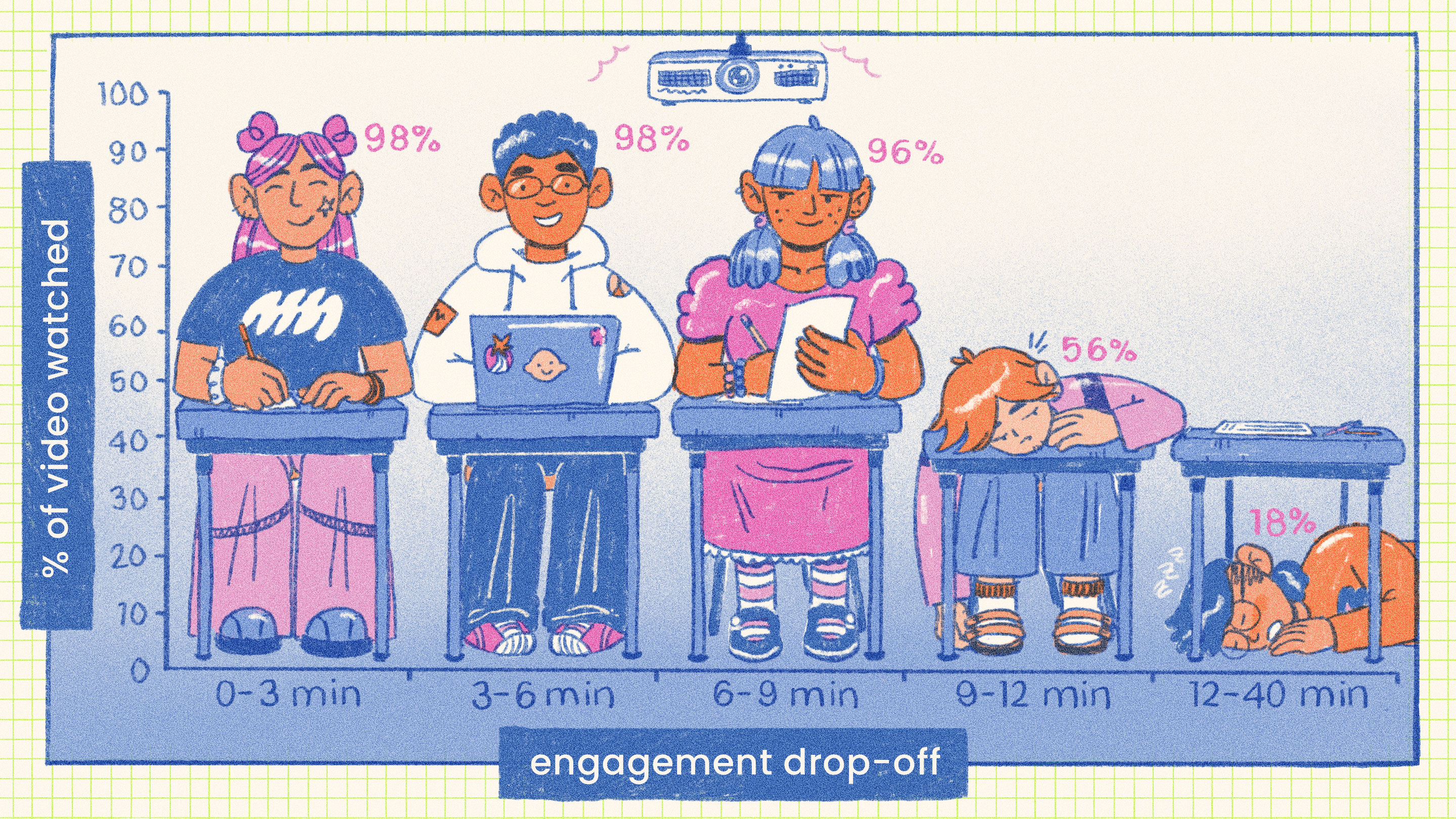
After analyzing data from 7 million viewing sessions from over 127,000 students taking online courses at MIT, Harvard, and Berkeley, researchers found that students stopped watching once videos stretched past 9 minutes. Among the longest lessons—lasting up to 40 minutes—only 18 percent of the material was watched, leaving vast knowledge gaps. To keep students engaged for greater periods, the researchers conclude in the 2014 study, break long stretches of instruction “into short chunks, ideally less than 6 minutes,” using each segment to “explain a concept succinctly.”
Attention spans have always been in short supply—even as smartphones and social media introduce new sources of distraction. In a 2025 study, for example, researchers found that “classroom mind wandering is common” after observing that elementary students struggled to stay focused during a 12-minute story, while a 2024 study found that breaking language lessons into smaller chunks improved vocabulary and reading comprehension scores for middle and high school students, largely because the breaks gave them “time to process information effectively and prevent cognitive overload.”
Part of the reason is biological: The moment your lesson begins, you’re working against one of the brain’s fundamental limitations. In a 2024 study, researchers note that “adolescents’ ability to sustain attention is still developing up to and including 16–17 years of age.” No matter the age—whether it’s a preschooler playing with blocks or a high school sophomore learning about chemical bonds—attention tends to fizzle out pretty quickly, since the neural circuitry that helps students maintain focus is still developing.
Working Within ‘Human Cognitive Architecture’
A study finds that frequent short breaks dramatically improve focus and academic performance.
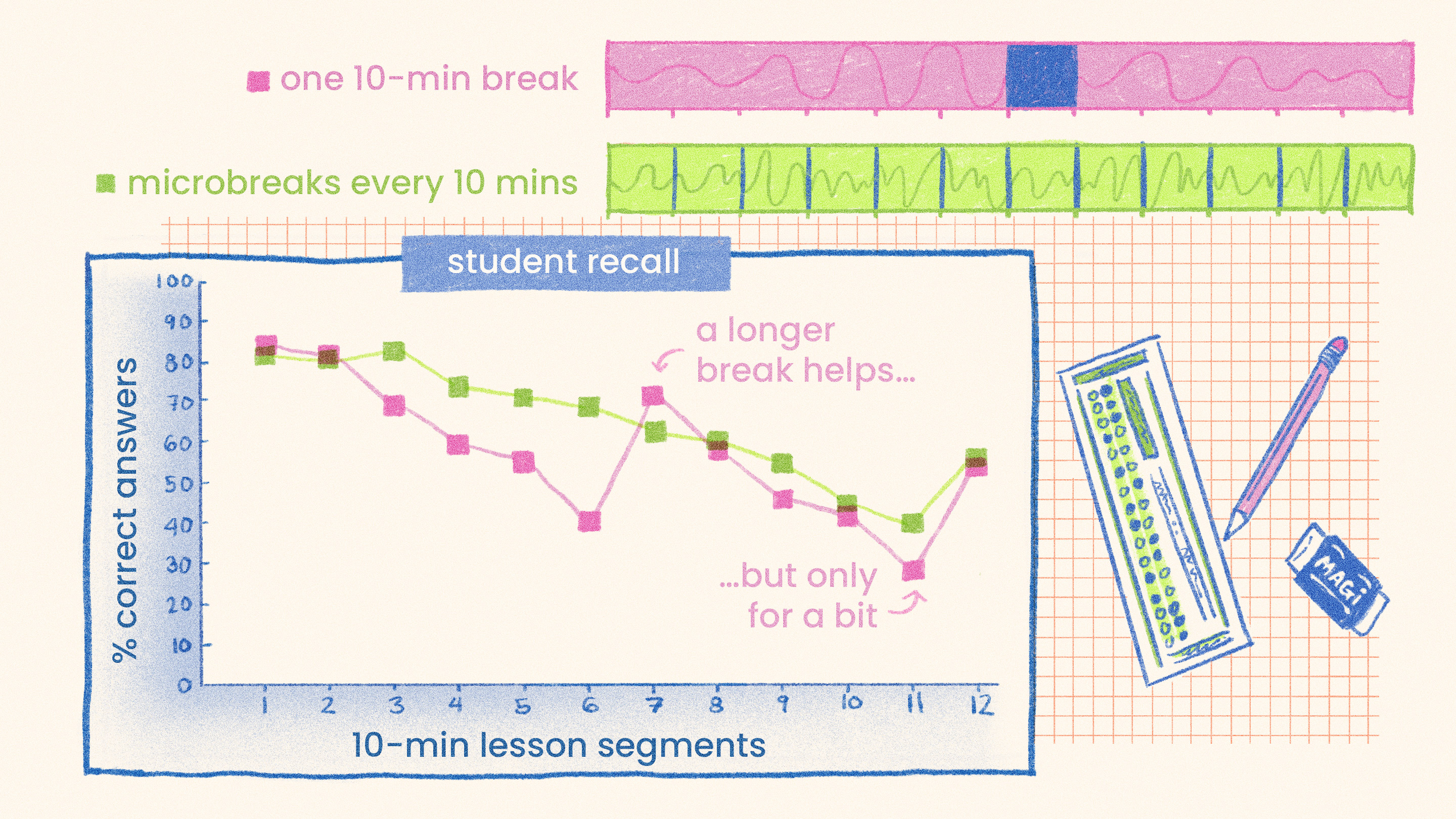
When researchers from the U.K. and Sweden set out to analyze the impact of breaks on student attention, they assigned two types of breaks to 253 college students. In the first group, students received a 10-minute break halfway through a lengthy lesson, while students in the second group took 90-second “microbreaks” every 10 minutes—brief pauses to close their eyes, stand up and stretch, or take a short walk around the room.
The researchers then closely tracked how much of the material students remembered from each 10-minute segment of the lesson. In both groups, according to the 2025 study, recall declined as time passed—but at vastly different rates. On average, students receiving regular short breaks throughout the lesson remembered 65 percent of the material, compared to just 56 percent for students with one mid-lesson break.
The sharpest decline in recall occurred at the midpoint: the single-break group hit a low point, and their recall dropped to about 40 percent, nearly 30 percentage points below their peers, who had been taking frequent breaks.
“Perfect sustained attention is fundamentally impossible due to inherent neural, biological, and cognitive limitations,” the researchers explain. Instead of trying to overcome these limits, teachers should design lessons that “work harmoniously with the fundamental properties of human cognitive architecture” by offering frequent brain breaks. Those pauses aren’t a detour from learning, they actually make the next several minutes of instruction more productive, the researchers conclude.
For middle and high school students learning complex material, brain breaks should be used strategically, well before cognitive fatigue sets in. “I might start seeing them look sleepy or lose eye contact, and so when I do a brain break, it grabs their attention, it gets them excited, it allows them to interact with their classmates,” says middle school Spanish teacher Jamie Midyette, who incorporates simple activities like “Pass the Ball” and “Heads or Tails” to keep her students engaged throughout the period.
Breaks to Manage the Classroom
Quick resets during the course of learning can short-circuit off-task behavior.
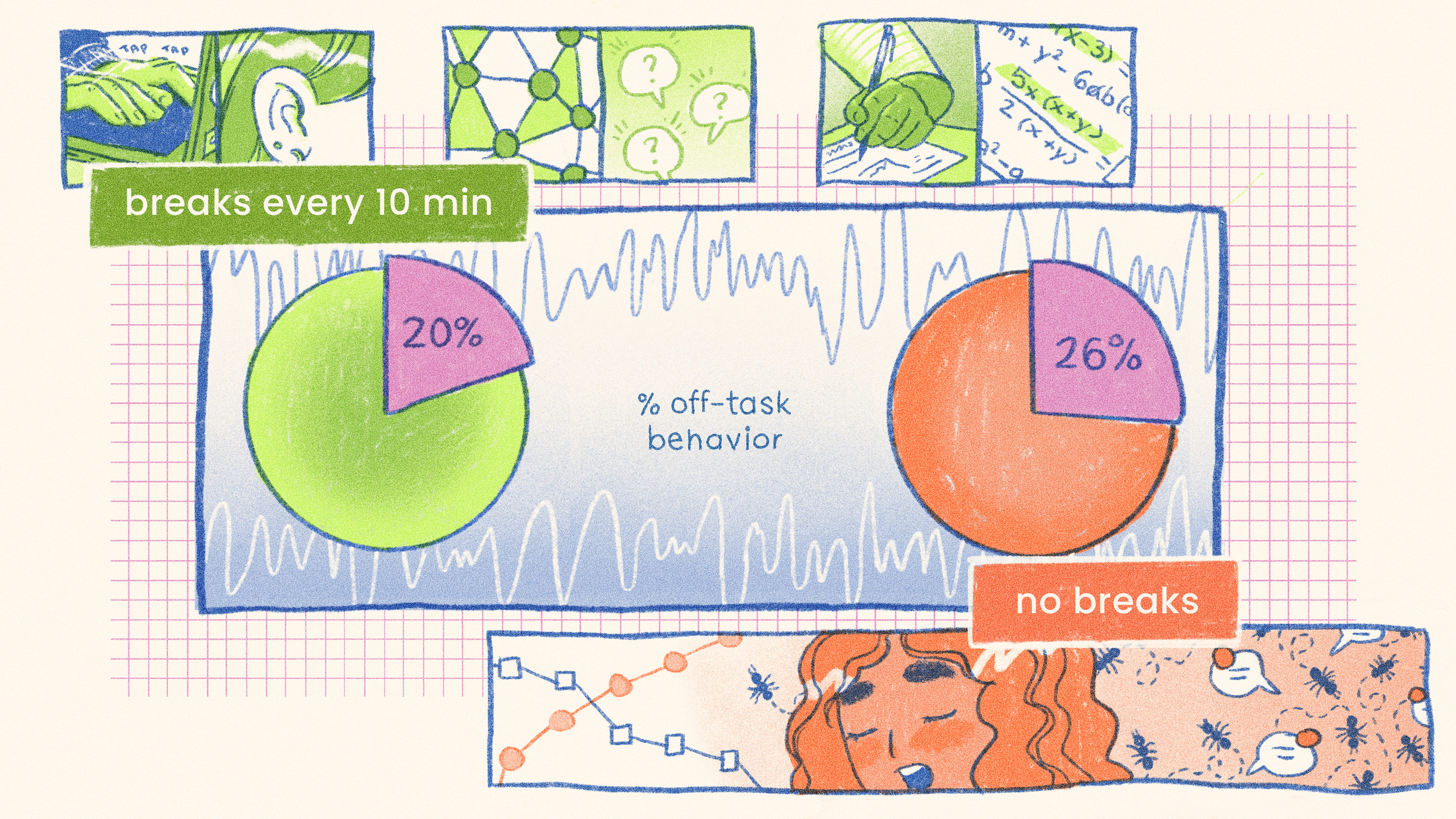
In a 2016 study, psychologist Karrie Godwin and her colleagues observed hundreds of elementary school students, tracking their behavior during a continuous 30-minute lesson compared to similar lessons broken into three 10-minute chunks. They discovered that attention didn’t just fade as lessons stretched on—off-task behavior increasingly crept into the classroom.
Incorporating breaks led to students being off-task 20 percent of the time, while the longer lesson led to a 6-point increase in off-task behavior, up to 26 percent. Brain breaks don’t just boost attention, they can also curb the fidgeting, chatter, and other off-task behaviors that can make a lesson hard to manage, Godwin and her colleagues found.
“At some point, attention will break down,” Godwin told Edutopia in a recent interview. “From an instructional standpoint, the goal is to introduce breaks before students reach that point.” A short break can help replenish the cognitive resources that students need to be more engaged and stay focused—which in turn helps them “remember the learning that happened just before the break,” Godwin says.
When a student starts doodling, whispering to a neighbor, or becomes easily distracted, the instinct may be to treat the behavior as a discipline problem. But students may also be reaching the limits of their ability to stay focused. The goal isn’t to artificially split longer lessons into smaller chunks, but to recognize that a short brain break right before things head off the rails can be an effective reset. And breaks don’t need to be complicated, notes elementary teacher Donna Paul. “I’d say, ‘Check your posture—can you lift your chest and lengthen your spine?’ Then we’d all take one big stretch, roll our shoulders, and shake out our hands. It’s a tiny reset that reminds students how much posture affects energy and attention.”
A Neural Glimpse: Breaks and the Brain
Brief pauses give the brain time to process new information, consolidate memories, and prepare students for more learning.
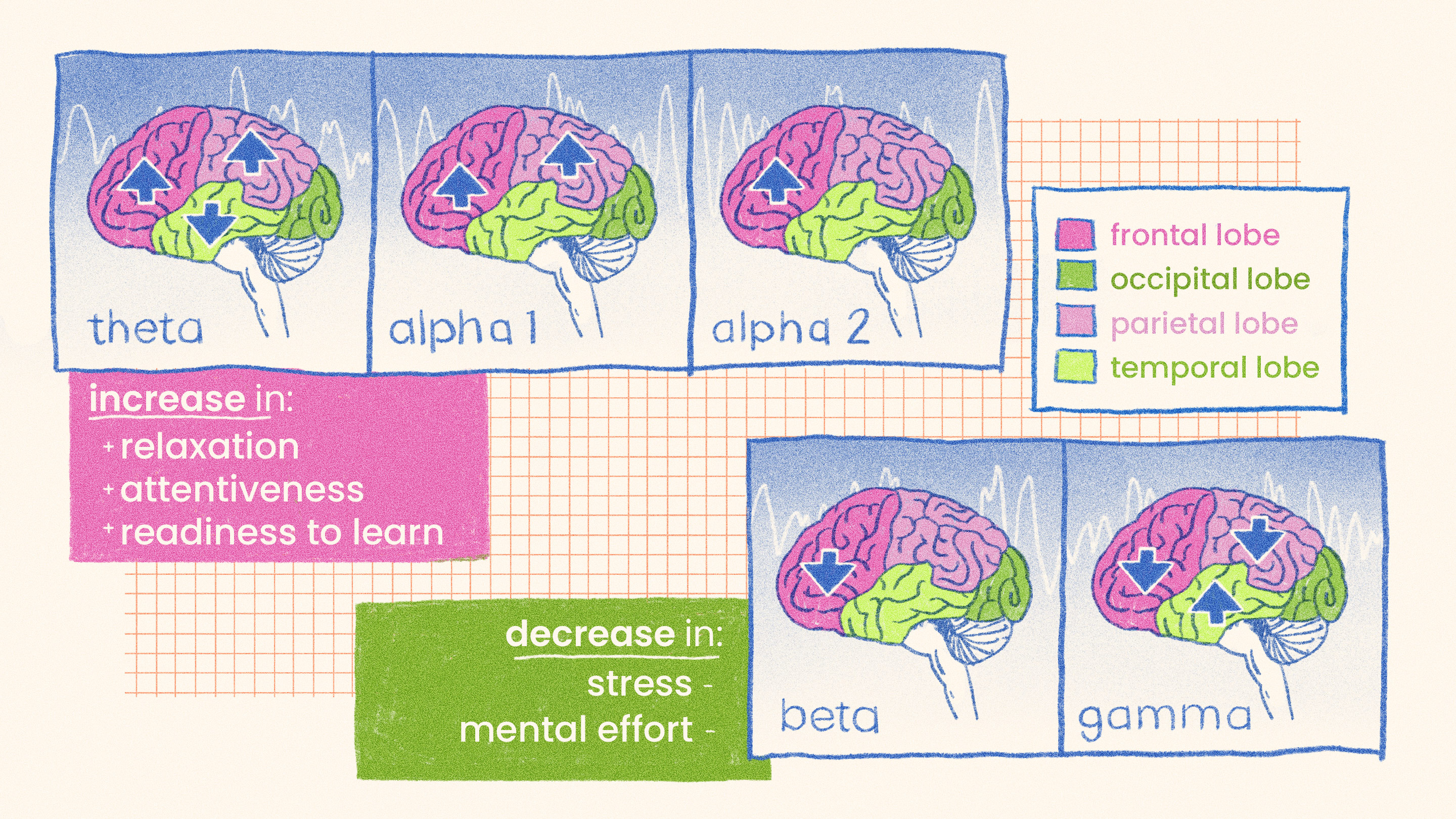
In a 2025 study, neuroscientists fitted preschool students with EEG headsets—a lattice of sensors positioned around the scalp to record electrical activity—then measured brain activity before, immediately after, and 20 minutes after a four-minute exercise break that broke up a short storytelling session.
After the break, neural activity increased in the theta, alpha 1, and alpha 2 frequency bands, suggesting “enhanced relaxation, attentiveness, and readiness to learn,” the researchers note. Meanwhile, activity in the gamma and beta bands decreased, indicating “decreased stress and mental effort.” These effects persisted as long as 20 minutes later, suggesting that the benefits of the break may linger well beyond the activity itself.
Even quiet rest is beneficial, researchers discovered in a 2021 study. Immediately after learning a new motor skill—typing with their nondominant hand—a group of adults took a short break while neuroscientists analyzed brain activity using magnetoencephalography, a highly sensitive brain-scanning technique. What looked like simply sitting and doing nothing, the researchers found, was actually a period of rapid neural rehearsal, with the brain replaying practice patterns between the neocortex, where sensory and motor skills are processed, to the hippocampus, the brain’s memory center, over two dozen times in the span of 10 seconds. During breaks, learning may appear to stop, but our brains are still rapidly processing information, ensuring that new experiences are organized and integrated into long-term memory—making breaks a fundamental part of learning, not a detour away from it.
Moving Matters
Quick bursts of movement can powerfully support brain function.
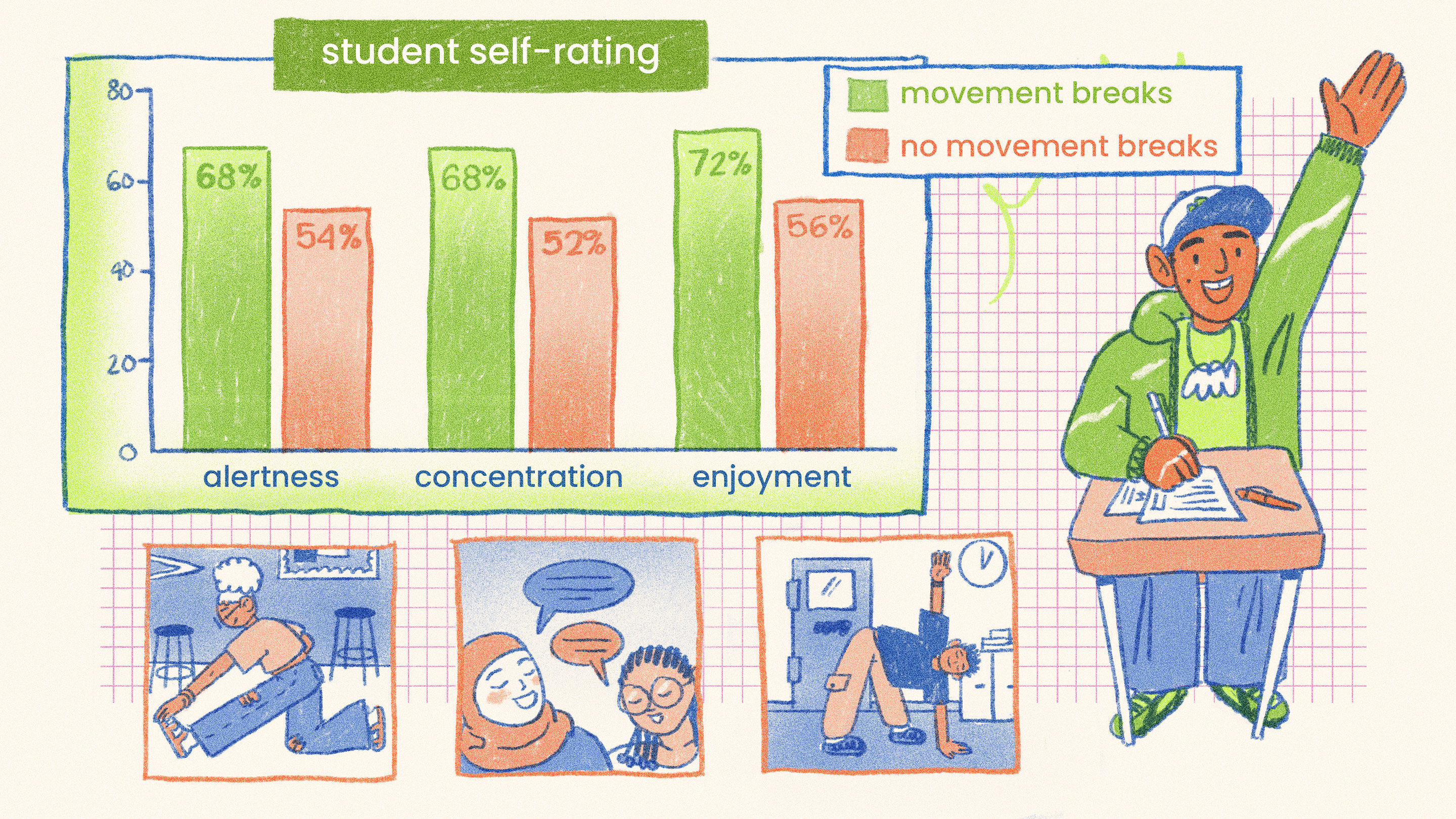
In a 2021 study, university students periodically spent 5 to 10 minutes during class doing simple movement exercises—brisk walking, jumping jacks, squats, or high knees—before returning to their desks.
Feeling reenergized after these breaks, the students not only rated their alertness about 14 percentage points higher than students without movement breaks, but their concentration and enjoyment of the lesson also rose by 16 points, compared to sedentary peers. During interviews, teachers reported that students were “more animated and more vocal” and willing to participate in class more. The movement-rich break, in other words, didn’t just replenish attention—it also changed how ready students were to engage with the lesson.
“Working on mentally demanding tasks leads to fatigue,” forcing students to expend more cognitive effort to keep up, the researchers conclude. Movement breaks, introduced at natural transition points in a lesson or whenever classroom attention threatens to veer off course, interrupt that process, giving students a chance to recover—with the added bonus of boosting interest in the lesson.
To stay “engaged and stimulated,” writes theater educator Jocelyn Greene, students need brief and regular respites from learning—and active breaks are especially potent because they can boost working memory and blood flow to the hippocampus, the research shows. “Rather than thinking of them as breaks when learning stops,” Greene adds, “you can think of these exercise breaks as another way to build students’ brain function.”
All graphics by Vreni Stollberger.