
Make Hands-On Activities Work for Lower Elementary Students
Teachers can make projects more accessible and engaging for students by prioritizing creativity and learning over perfection.
Your content has been saved!
Go to My Saved Content.If you’re a first-grade teacher like me, you may have tried to bring all kinds of cute projects you found online into the classroom, only to be disappointed. Your students’ work didn’t look like the exemplars online, and you worried that students were missing out on the learning as you ran around the room trying to help everyone.
I wanted my students to be able to complete engaging, real-world projects, so I decided to try something different—I stopped focusing on exemplars online and started to prioritize real learning over polished end products. That’s when projects truly started to make a difference in my classroom.
I have four projects that my first-grade students have completed and truly enjoyed in my classroom to share. Before diving into the specific projects, I wanted to share five keys to success that have helped me make projects work in my elementary classroom.
Managing the Work
1. Front-load the information and vocabulary. When I have a project in mind, I save it for the end of the unit. This way, students have all the background knowledge needed to get the most out of it.
2. Set clear steps that students will accomplish that day. I used to give students the project and let them take it at their own pace, but this led to varying levels of success. Instead of letting them run with the entire assignment, I break it into chunks and give clear directions each day on what they need to accomplish. No one moves on until everyone is done with that step.
3. Embrace the imperfect products. Student-created projects yield more learning; it’s OK if they don’t look pretty. Your expectations can be sky-high for the academics, not the aesthetics. Giving them the space to make mistakes, try again, and even be comfortable with a product that doesn’t look exactly how they pictured it actually leads to more authentic experiences.
4. Connect literacy as much as possible. I have found that my students get the most out of projects when reading and writing are heavily embedded in every step. When students begin to recognize writing as part of the process and not just the end product, they are better able to practice their metacognitive skills and express themselves without pressure. I like to remind my students that jagged edges are the proof we are building our fine motor skills.
5. Save time for sharing and celebrating. Our projects may not look perfect, but that doesn’t mean we shouldn’t take the time to share them and celebrate them. I save space at the end of every project for students to show their work and talk us through what they’ve created and what it means to them.
Now that you’ve heard my keys to success, here are a few examples of projects that my classes and I have loved.
4 PROJECTS THAT WORKED FOR MY STUDENTS
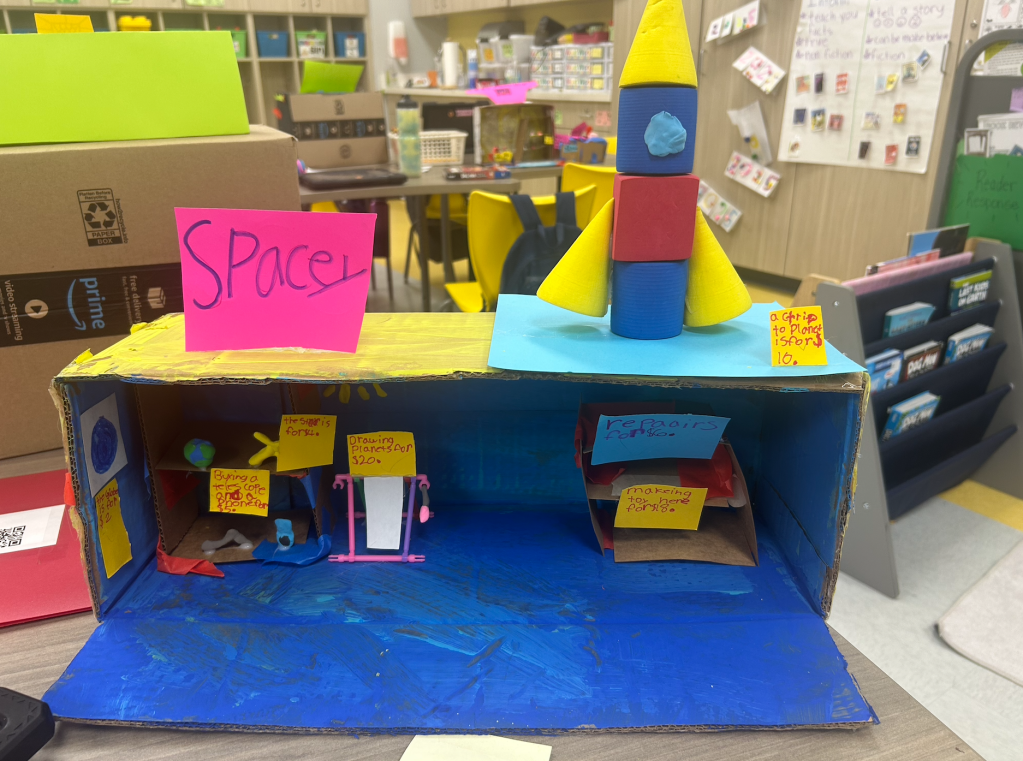
1. Build a Store. In this project, students use their knowledge of spending and saving to create a store. Students use a shoe box to create their storefront, filling it in with drawings , clay, or cut outs to represent the type of store they’ve created. Students then need to create a menu of items that someone could purchase at the store. Once students have created their own, they can go around and shop at each other’s, making notes of the budget, spending, and savings.
To deepen the learning and implement a literacy connection, I ask every student to write and then perform an advertisement for their store as if it were a TV commercial.
Student example: At this space-themed store you can purchase goods like space decorations, food you can eat in space, and a telescope. You can also purchase services like planet-themed painting lessons and an actual guided trip to the moon.
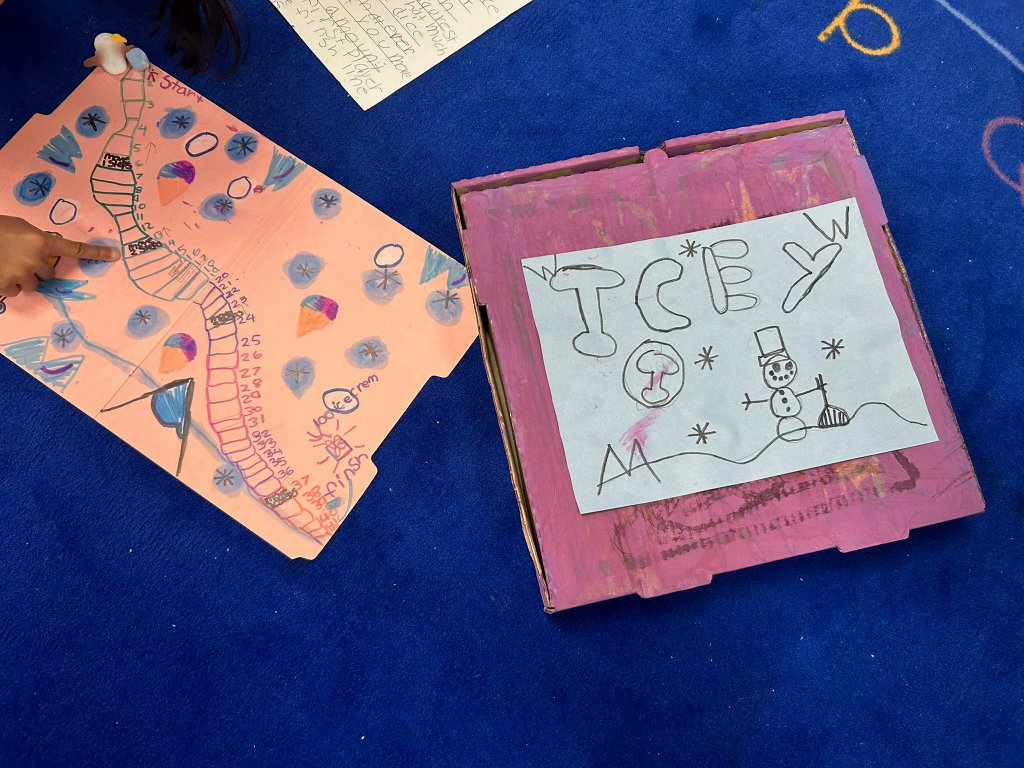
2. Design a Game. In this project, students use their knowledge of rules, laws, and fairness to create their own game. Students can use pizza boxes as the game board on which to make their design and have the freedom to choose whatever rules they want. Students then play one another’s games and discuss the rules, and discuss whether a game is fair or not.
Students have to write out the rules and directions for how to play the game in a legible manner, so all students can understand. This helps them practice their communication and handwriting skills.
Student example: In the board game Icey, students race snowmen from start to finish using a dice roll. Doubles and special spaces got you to the ice cream finish the fastest.
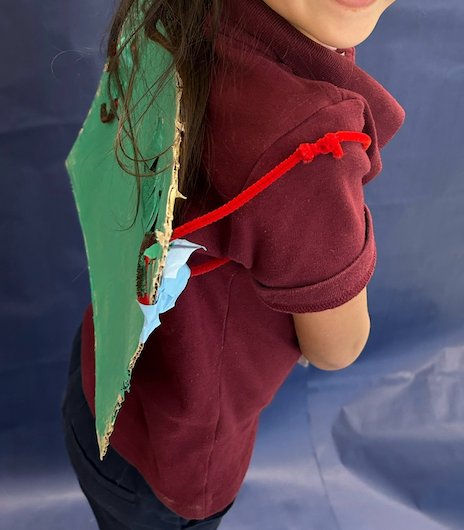
3. Biomimicry Invention. In this game, students use their knowledge of animal adaptations to create their own survival techniques. Students think about what characteristics would help an animal survive, and then create their own version that they themselves could use. Students use all kinds of recycled materials to design shells, camouflage, and more.
Each student then writes out an explanation of their adaptation invention, how and why it works, and then presents that information to the class at the invention fair. Students can then discuss one another’s ideas and determine which would be more effective for helping them survive in the wild.
Student example: “The Protector Shell” was inspired by a turtle’s shell. This backpack doubles as a defense that will protect you from any attackers.
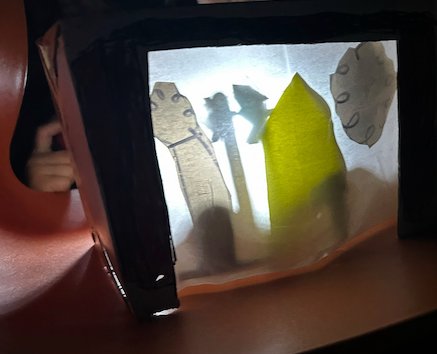
4. Shadow Puppet Theaters. In this project, students use their knowledge of the properties of light to use materials that are opaque, translucent, and transparent to create a scene. Students use materials like wax paper, plastic wrap, aluminum foil, foam, popsicle sticks, and regular paper to create their scenes and then write out a script to go along with it.
Students can then perform their scene using the puppets they’ve made from the different materials and reading from their scripts. For this project to work effectively, it is best to have students perform their scenes in a dark room with the only light shining on the puppet scene.
Student example: This theater transported us deep into the woods, where two young children were lost. Their journey to find their home kept us all on the edge of our seats.
These projects helped my students show what they know, while having fun, and helped me let go of the need for everything to look perfect.