
Using ‘Brain Fire Drills’ to Help Students Prepare for the Unexpected
Implementation intentions help students think through tricky situations in advance so that they know what to do in the moment.
Your content has been saved!
Go to My Saved Content.The first weeks of school are filled with routines. We teach students how to enter the classroom, where to turn in assignments, how to transition between activities, and how to ask for help. These procedures matter because they reduce cognitive load. Instead of spending valuable mental energy figuring out what to do next, students can devote more attention to learning.
But many of the biggest challenges students face throughout the year are not procedural. A classmate starts copying their work. They have a rough night at home and don’t finish an assignment. Their group isn’t contributing. They bomb a quiz. They freeze during a presentation.
In those moments, students are forced to make decisions under stress. Unfortunately, stress is one of the worst times to start thinking. When emotions rise, we tend to react automatically rather than respond intentionally.
What if we gave students the opportunity to think through some of those situations before they ever happened?
In the 1990s, psychologist Peter Gollwitzer began researching implementation intentions, simple “If…, then…” plans that connect a future situation with a predetermined response. Instead of hoping we’ll make a good decision in the moment, we decide ahead of time. Decades of research have shown that implementation intentions significantly increase the likelihood that people will follow through on their goals because these intentions reduce the amount of thinking required when the moment arrives. Rather than creating a plan under pressure, the brain retrieves one it has already practiced.
The Value of Being Prepared
I like to think of implementation intentions as brain fire drills.
We don’t practice fire drills because we expect a fire every day. We practice because if an emergency occurs, no one wants to invent a plan while alarms are sounding. We want the response to feel familiar. The same principle can apply to the everyday challenges students encounter throughout the school year. Brain fire drills give them a chance to mentally rehearse their response before emotions take over.
During the first few weeks of school, I give students a Google Doc with about 20 situations they are realistically likely to encounter during the semester. Instead of talking about what they shouldn’t do, we spend class time deciding what they will do. Students complete each prompt by finishing the sentence, “If ___ happens, then I will ___.”
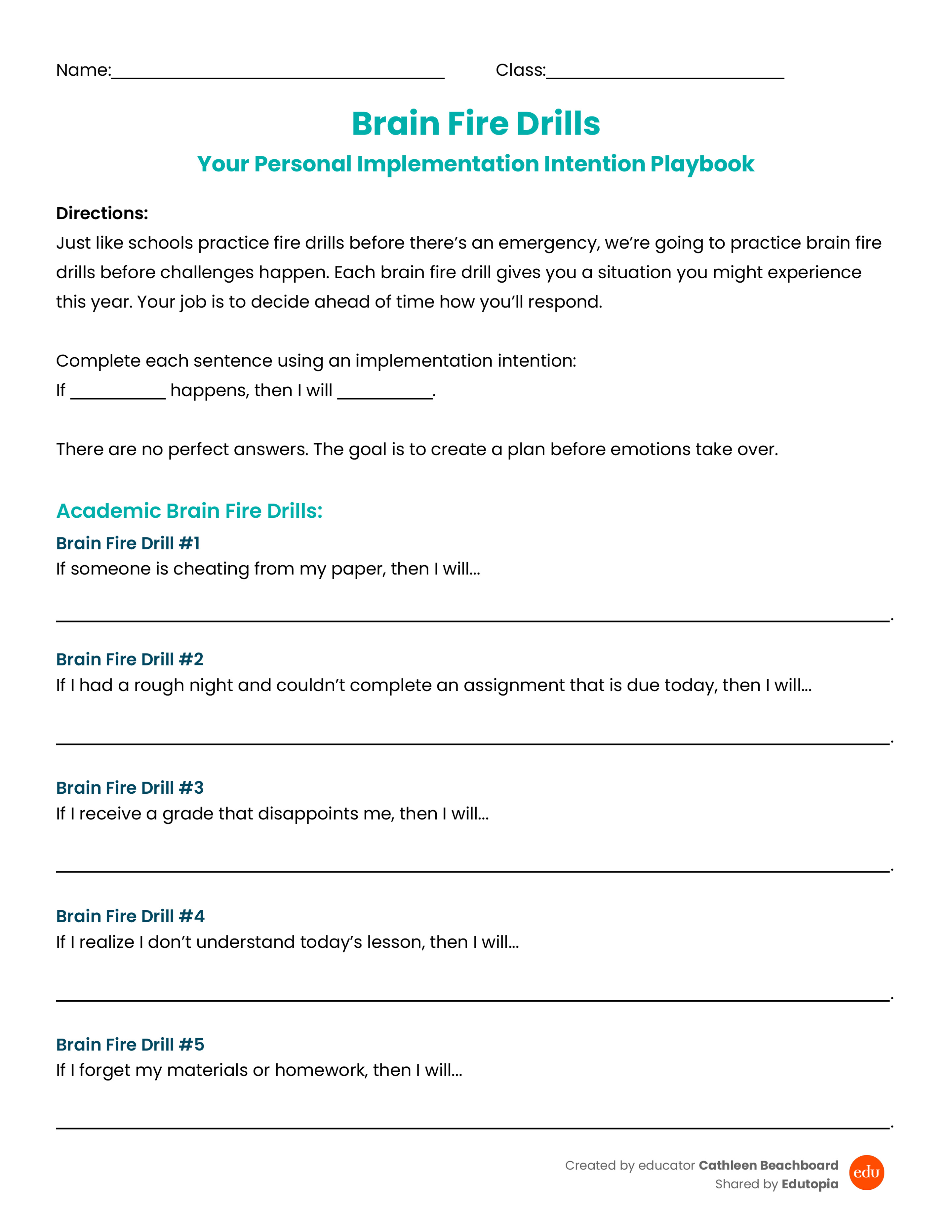
One important note: This activity is not designed to have students relive trauma or disclose personal experiences. Teachers should carefully choose situations that reflect common academic and social challenges rather than deeply personal or traumatic events. The goal is to build students’ confidence in navigating everyday obstacles, not to ask them to revisit painful experiences. Like a regular fire drill, these brain fire drills are designed to create readiness, not fear.
The psychology behind this routine is surprisingly powerful. Implementation intentions reduce cognitive load because students no longer have to generate solutions in the middle of stressful situations. They strengthen prospective memory, promote our ability to remember to carry out future intentions, and increase self-efficacy because students have already imagined themselves successfully navigating a challenge. In many ways, students are building mental pathways before they ever need to travel them.
What This Looks Like in the Classroom
I saw the power of a brain fire drill last year during a group project. Two students had reached an impasse. They couldn’t agree on the direction of their project, and the conversation was becoming increasingly tense. Before I could step in, one of the students quietly walked over to me.
“Can I get some water?” she asked. Then she smiled and added, “I’m using my brain fire drill.”
At the beginning of the year, one of the prompts on our implementation intentions document was, “If I disagree with my group members, then I will ___.” Her plan was simple: If she became too frustrated to think clearly, she would take a short break, calm down, and return when she was ready to problem-solve.
Two minutes later, she returned to her partner and said, “I still don’t agree with your idea, but I don’t think we should try to solve this while we’re angry. Can we figure out a compromise that uses parts of both of our ideas?”
That’s exactly what they did.
I don’t know if that conversation would have happened without the brain fire drill. Maybe it would have. But I do know this: When emotions were running high, the student didn’t have to invent a strategy because she had already practiced one a few months earlier.
Assessing the Effectiveness of Implementation Intentions
The activity doesn’t end after the first week. Once each quarter, we revisit the document. Students highlight the implementation intentions they actually used, revise responses that didn’t work as well as they expected, and suggest new situations that should be added for future classes. Those conversations are often more valuable than the original activity because students begin to see themselves as problem-solvers rather than simply people reacting to circumstances.
I’ve also noticed an unexpected benefit: Many small behavior problems begin decreasing in frequency because students have already thought through how they want to respond. They aren’t making decisions in the heat of the moment. They’re following a plan they created when they were thinking clearly. So you can add this to your list of proactive classroom management strategies.
How to Try Brain Fire Drills in Your Classroom
1. Create a list of 15 to 20 realistic situations that students are likely to encounter during the school year. Again, focus on common academic and social challenges rather than traumatic or deeply personal experiences.
2. Introduce the idea of a brain fire drill. Explain that just as schools practice fire drills before emergencies happen, your class is going to practice thinking through challenges before they occur.
3. Give each student a copy of the brain fire drill Google Doc and have them complete each prompt using an implementation intention: “If ___ happens, then I will ___.”
4. Invite students to discuss their responses with a partner, a small group, or the entire class. They’ll quickly discover there is often more than one healthy way to respond to the same situation.
5. Keep the document. Rather than collecting it and moving on, leave the Google Doc accessible to make it a living document that students can return to throughout the year.
6. Once each quarter, revisit the document. Ask students to do the following:
- Highlight situations they actually experienced
- Reflect on whether their original plan worked
- Revise responses based on what they learned
- Suggest new scenarios for next year’s students
7. Celebrate growth. When students successfully use one of their implementation intentions, point it out. Help them recognize that they aren’t just solving a problem. They’re strengthening a thinking habit they’ll carry long after they leave your classroom.
The first few weeks of school are about more than teaching procedures. They’re about preparing students for the moments that can derail learning. We rehearse what to do if there’s a fire, and we can also rehearse what to do when life gets messy.